
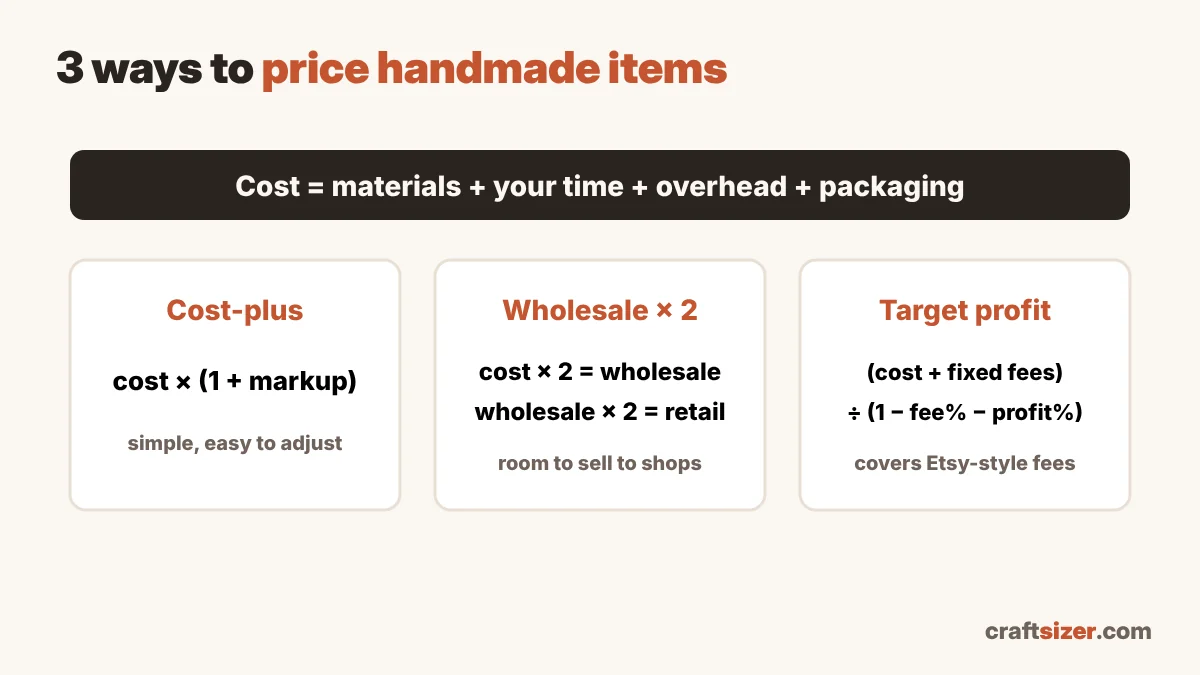
Three common ways to price handmade items
Every method starts with the same thing: what one item costs you to make. That's materials, your time at an hourly rate, a share of overhead (tools, electricity, software, the machine you'll eventually replace) and packaging.
1. Cost-plus
Take your cost and add a markup, such as 50%. It's simple and easy to adjust, but if the markup is too small, selling fees can eat most of it.
2. The wholesale × 2 formula
A classic formula many makers use: cost × 2 = wholesale price, and wholesale × 2 = retail price. It builds in room to sell to shops at wholesale later without losing money. It often gives the highest price, which can be right for unique or custom work.
3. Target profit after fees
Marketplaces and payment processors usually take a percentage of each sale plus a small fixed fee. This method sets the price so that after fees, a chosen share of the price is profit:
Price = (cost + fixed fees) ÷ (1 − fee % − profit %)
Which one should you use?
- Compare the take home column. If a method leaves very little after fees, it's too low.
- Check what similar items sell for. If your price is far above the market, look for ways to cut time or material cost rather than cutting your pay.
- Custom and personalized orders take more time. Price them separately or add a personalization fee.
Common pricing mistakes
- Leaving out your time. Then the price only covers supplies and you're working for free.
- Forgetting fees and packaging. They add up quickly on low-priced items.
- Pricing to match the cheapest seller. They may not be covering their costs either.
Selling vinyl decals? The vinyl decal pricing calculator works out vinyl and transfer tape cost from the decal size.
Frequently asked questions
What is the formula for pricing handmade items?
A common formula is materials + labor + overhead = cost; cost × 2 = wholesale price; wholesale × 2 = retail price. Many sellers also check that the price leaves enough profit after marketplace fees.
How do I include Etsy fees in my price?
Divide your cost plus fixed fees by (1 − fee percentage − profit percentage). For example, with 9.5% fees and a 30% profit target, divide by 0.605. Check current marketplace fees and adjust the numbers to match.
Should I charge for my time on handmade items?
Yes. Your time is usually the biggest cost. Pick an hourly rate and include it, even if you're starting out.
More free tools
Last updated 2026-10-08. All calculations run in your browser. Nothing you enter or upload is sent to a server.