
How to Epoxy a Tumbler
An epoxy coat gives a glitter or painted tumbler its smooth, glassy finish. The process isn't hard, but it rewards patience: thin coats, a steady cup turner and the right amount of resin. Here's the whole process, including how much epoxy to mix for each tumbler size.
By the CraftSizer team · Updated 2026-11-08
What you need
- A stainless steel tumbler (prepped, painted or with glitter already on)
- Craft epoxy resin (part A and part B)
- Graduated mixing cups and stir sticks
- A cup turner (tumbler spinner)
- Painter's tape, nitrile gloves and a well-ventilated space
- A heat gun or small torch for bubbles (optional but helpful)
How much epoxy to mix
Tumbler coats are thin, so you need less resin than most people expect. A common starting point is about 30 ml of mixed epoxy per coat on a 20 oz skinny tumbler, plus a little extra for what stays in the cup:
| Tumbler | Mix per coat (with 10% extra) | 1:1 resin: each part |
|---|---|---|
| 15 oz skinny | about 27 ml | about 13.5 ml |
| 20 oz skinny | about 34 ml | about 17 ml |
| 30 oz skinny | about 41 ml | about 20.5 ml |
For other sizes, thicker coats or a 2:1 resin, use the epoxy resin calculator.
Step by step
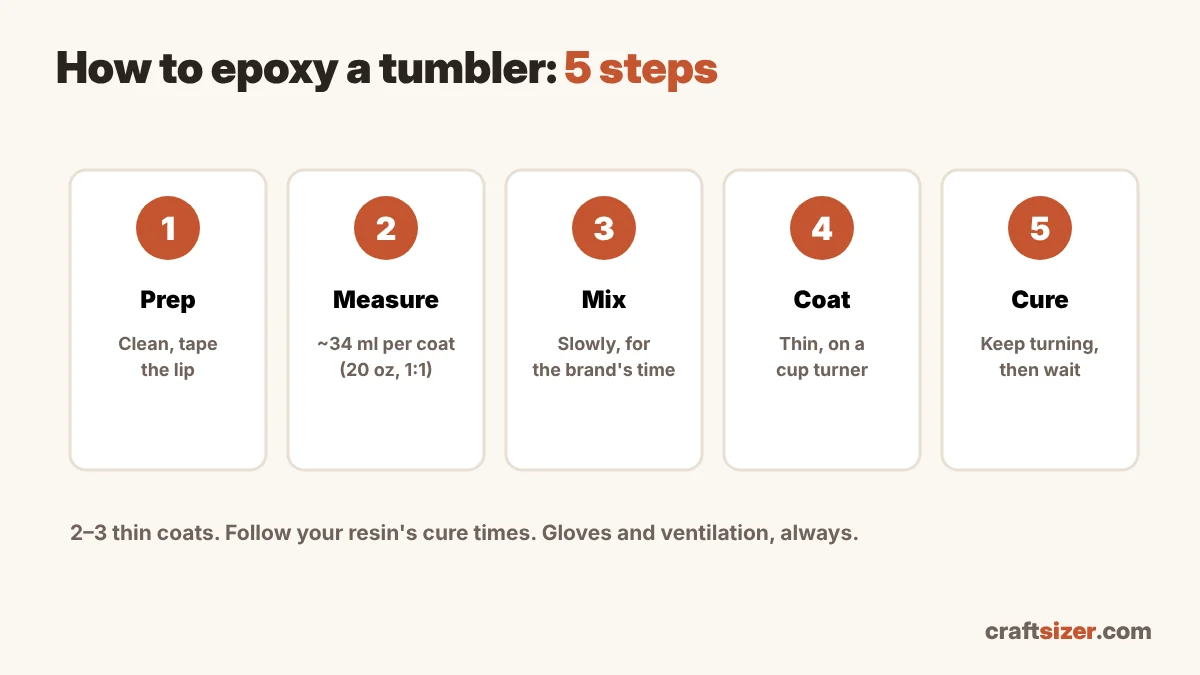
- Prep the tumbler. Make sure the surface is clean and dry. Tape off the lip area (many crafters leave about a quarter inch clear at the top) and the bottom edge, so resin doesn't run where you don't want it.
- Measure. Pour part A and part B into a graduated cup in your resin's ratio. Measure carefully: an off ratio is the most common reason resin stays sticky.
- Mix. Stir slowly and thoroughly, scraping the sides and bottom, for the time your brand recommends. Stirring fast whips in bubbles.
- Apply a thin coat. With the tumbler turning, spread the resin evenly with a gloved finger, a foam brush or a stir stick. Thin is better: a thick coat is more likely to drip and sag.
- Pop bubbles and pull the tape. Pass a heat gun or torch quickly over the surface to release bubbles. Remove the tape while the resin is still wet for a clean edge.
- Let it cure on the turner. Keep the tumbler turning until the resin has set enough not to sag, often several hours. Check for drips now and then.
- Add more coats. Most tumblers get two or three coats. Follow your resin's recoat time, and lightly sand any bumps between coats if needed.
Common problems
| Problem | Likely cause | Try |
|---|---|---|
| Sticky or soft resin | Ratio off, or not mixed enough | Measure carefully and mix for the full time |
| Drips or a ridge at the bottom | Coat too thick, or turner stopped too early | Thinner coats, and keep turning longer |
| Bubbles | Fast stirring, or a cold room | Stir slowly, work in a warm room, use quick heat |
| Dimples or fish eyes | Dust, oil or moisture on the surface | Clean and dry well; avoid touching the surface |
Safety and food contact
- Wear nitrile gloves and work somewhere well ventilated.
- Follow your resin's full cure time before use. Full cure usually takes much longer than the time it takes to feel dry.
- Check whether your resin is rated food safe once cured. Many crafters keep the lip area free of resin so it never touches the mouth.
- Hand wash epoxy tumblers. Dishwashers can damage the finish.
Sublimating instead?
If you'd rather print a full design straight onto a coated tumbler, sublimation needs no resin at all. Get the template size with the tumbler template calculator, and see the tumbler template size chart for 15, 20 and 30 oz tumblers.
Frequently asked questions
How much epoxy do I need for a tumbler?
About 30 ml of mixed epoxy per coat on a 20 oz skinny tumbler is a common starting point, or about 34 ml with a little extra for the cup. A 15 oz tumbler takes about 27 ml and a 30 oz about 41 ml per coat, with that extra.
How many coats of epoxy does a tumbler need?
Most tumblers get two or three thin coats. Follow your resin's recoat time between coats.
Why is my epoxy tumbler still sticky?
Usually the ratio of part A to part B was off, or the resin wasn't mixed long enough. Measure carefully and mix for the full time your brand recommends.
Do I need a cup turner for epoxy tumblers?
It's strongly recommended. Turning the tumbler while the resin sets keeps the coat even and stops it from dripping and sagging to one side.